Society of Environmental and Occupational Health

Society of Environment and Occupational Health
Society of Environment and Occupational Health
Construction- Safety & Health
World Day for Safety and Health at Work
World Day for Safety and Health at Work takes place on April 28, 2022. The day was declared by the International Labour Organization (ILO) to promote the prevention of occupational accidents and diseases globally. World Day for Safety and Health at Work is an awareness-raising campaign “intended to focus international attention on emerging trends in the field of occupational safety and health and on the magnitude of work-related injuries, diseases and fatalities worldwide”
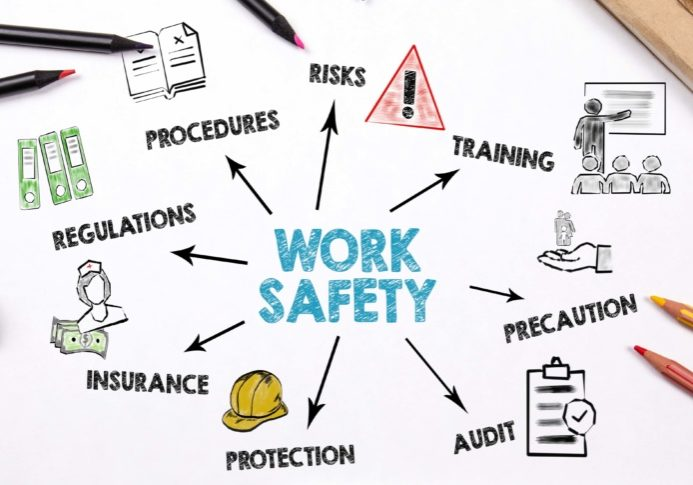
Safety & health is a well-recognized and important component in construction activities, and it is equally important to protect the workers from direct, indirect accidents and protect their health. There has been a far from the satisfactory record for both these concerns thus far and we still need to make much progress for improvement so as to provide the construction worker a safe & healthy workplace.
Accidents, ill health and incidents are seldom random events. They generally arise from failures of control and involve multiple contributory elements. The immediate cause may be a human or technical failure, but such events usually arise from organisational failings, which are the responsibility of management. Successful safety and health management systems aim to utilise the strengths of managers and other employees. The organisation needs to understand how human factors affect safety and health performance.
The line-management should monitor safety and health performance against predetermined plans and standards. Monitoring reinforces management’s commitment to safety and health objectives in general and helps to develop a positive safety and health culture by rewarding positive work done to control risk. Two types of monitoring are required:
Active Systems: This monitors the design, development, installation and operation of management arrangements, safety systems and workplace precautions.
Reactive Systems: These monitor accidents, ill health, incidents and other evidence of deficient safety and health performance
The Management System in Occupational Health and Safety
An organization’s management system should cover:
· Framing a basic policy for health and safety of the organization’s workers.
· Planning & implementation of the process for accident and ill health prevention.
· Management responsibilities of line managers for above measures
· Framing the practices and procedures, and having sufficient resources for development, implementation and periodic reviewing of the occupational safety and health policy for its efficacy and success.
For a successful safety and health management system, the key requirements are:
1. Policy and commitment: Prepare an occupational safety and health policy program as per the Indian Factories Act 1948- amended 1987.The policy will contribute to all aspects of business performance as part of a demonstrable commitment to continuous improvement and to preserving and developing human and physical resources, thus will reduce financial losses and liabilities.
2. Planning: The workplace should formulate a plan to fulfil its safety and health policy as set out in the Safety Statement. An effective management structure and arrangements should be put in place for delivering the policy. Safety and health objectives and targets should be set for all managers and employees.
3. Implementation and operation: For effective implementation, besides adequate resources, all staff should be motivated and empowered to work safely to protect their long-term health. Also sustained & effective communication and the promotion of competence allow all employees and their representatives to make a responsible and informed contribution to the safety and health efforts. Risk Assessment methods should be used to determine priorities and set objectives for eliminating hazards and reducing risks. Wherever possible, risks should be eliminated through the selection and design of facilities, equipment and processes. If risks cannot be eliminated, they should be minimised by the use of physical controls and safe systems of work or, as a last resort, through the provision of PPE. Performance standards should be established and used for measuring achievement. A common understanding of the organization’s vision, values and tangible efforts on health and safety along with the committed &sincere efforts by the active leadership of senior managers fosters a positive safety and health culture.
4. Measuring performance: The organisation must measure, monitor and evaluate safety and health performance in a timely manner against the set standards to see when and where improvement is needed. They should do active self-monitoring to look at both ‘the hardware’ (premises, plant and substances) and ‘the software’ (people, procedures and systems, including individual behavior and performance). If controls fail, reactive monitoring should find out why they failed, by investigating the accidents, ill health or incidents, which could have caused harm or loss.
The objectives of active and reactive monitoring are:
· To determine the immediate causes of substandard performance
· To identify any underlying causes and implications for the design and operation of the safety and health management system.
5. Auditing and reviewing performance: To improve its safety and health management system, the organisation should review it continuously to improve it. There should be a systematic review of performance based on data from monitoring and from independent audits of the whole safety and health management system. These will also help in compliance of the organisation’s responsibilities under the statutory requirements & provisions. There should be a strong commitment to continuous improvement involving the development of policies, systems and techniques of risk control. Performance should be assessed by internal reference to key performance indicators, External comparison with the performance of business competitors and best practice in the organisation’s employment sector. Auditing and reviewing performance process should be used for the process of continual improvement.