Society of Environmental and Occupational Health

Society of Environment and Occupational Health
Protecting Environment and Promoting Occupational Health, Safety and Wellness
Society of Environment and Occupational Health
Protecting Environment and Promoting Occupational Health, Safety and Wellness
Occupational Health
Occupational health is an area of work in public health to promote and maintain highest degree of physical, mental and social well-being of workers in all occupations. The main focuses in occupational health is to maintenance and promote workers’ health and working capacity; improve working environment to become conducive to safety and health and development working cultures. The science and practice of occupational health involves several disciplines, such as occupational medicine, nursing, ergonomics, psychology, hygiene, safety and other. Occupational safety deals with all aspects of physical, mental and social health and safety in a workplace. It is the umbrella for company’s efforts to prevent injuries and hazards in all work environments. Every industry presents various kinds of safety hazards to its employees.
The research and regulation of occupational safety and health are a relatively recent phenomenon. As labour movements arose in response to worker concerns in the wake of the industrial revolution, worker’s health entered consideration as a labour-related issue. In 1700, De Morbis Artificum Diatriba, outlined the health hazards of chemicals, dust, metals, repetitive or violent motions, odd postures, and other disease-causative agents encountered by workers in more than fifty occupations.
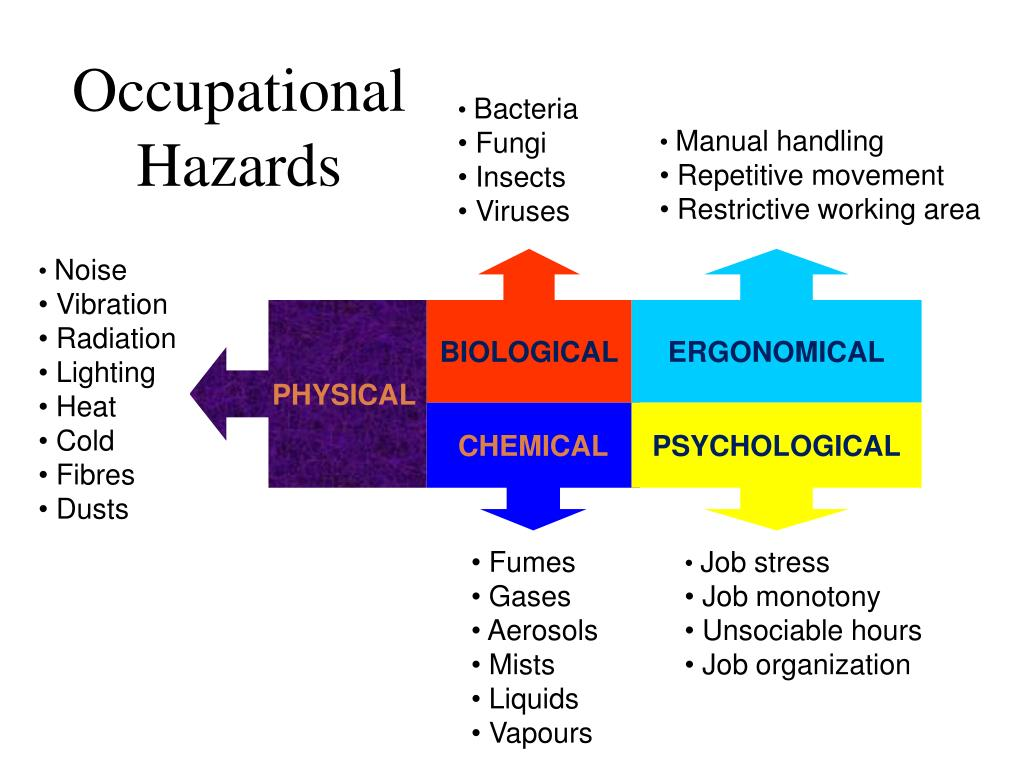
The Occupational Safety and Health Administration (OSHA) describe five categories of occupational hazards: physical safety hazards, chemical hazards, biological hazards, physical hazards, and ergonomic risk factors. Physical safety hazards include anything that could lead to injury in a workplace accident.
Chemical hazards are a subtype of occupational hazards that involve dangerous chemicals. Exposure to chemicals in the workplace can cause acute or long-term detrimental health effects. There are many classifications of hazardous chemicals, including neurotoxins, immune agents, dermatologic agents, carcinogens, reproductive toxins, systemic toxins, asthmagens, pneumoconiotic agents, and sensitizers
The workplace exposure to hazards such as silica dust, engine exhausts or welding fumes, among others are associated with increased prevalence of heart disease.
Health care professionals are at risk to exposure to blood-borne illnesses as HIV, hepatitis B, and hepatitis C. They are also vulnerable particularly to emerging infectious diseases, especially when not enough resources are available to control the spread of the disease. Veterinary health workers, including veterinarians, are at risk for exposure to zoonotic disease.
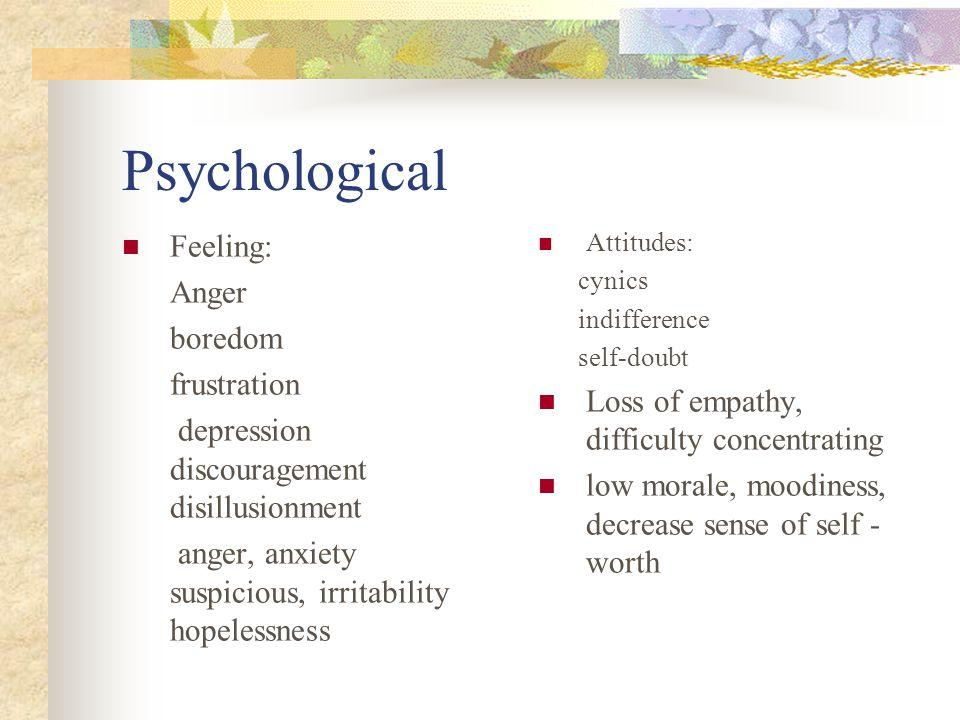
Psychosocial hazards in the workplace include occupational burnout and occupational stress, which can lead to burnout.
Physical hazards include ergonomic hazards, radiation, heat and cold stress, vibration, and noise hazards.
Each year in the US, twenty-two million workers are exposed to noise levels that could potentially harm their health. Occupational hearing loss is the most common occupational illness in the manufacturing sector. Workers in certain fields, such as musicians, mine workers, and even those involved with stock car racing, are exposed to higher levels of noise and therefore are at a higher risk of developing hearing loss.
Industrial development and increasing demand for diverse goods and services to cater to the increasing whims and needs of humanity have resulted in chemicals being utilized in many products and processes. Chemical hazards are mainly caused by the characteristics of chemical substances that may cause explosions, fires, or corrosions; or emit poisonous gases or mini particles. The type of chemical hazards at workplace are asphyxiates, corrosives, carcinogens, irritants, Mutagens, reactive, sensitizers, flammable and Tetrogens,
Occupational Health Guidelines for Chemical Hazards summarizes information on permissible exposure limits,chemical and physical properties, and health hazards. It provides recommendations for medical surveillance, respiratory protection, and personal protection and sanitation practices for specific chemicals that have Federal occupational safety and health regulations. These recommendations reflect good industrial hygiene and medical surveillance practices, and their implementation will assist development and maintenance of an effective occupational health program.
Occupational ergonomics is a discipline which attempts to adapt the job to the worker with the goal of promoting worker health, safety, and comfort as well as productivity.
The health and illness are due to the interaction between biological, psychological, and social factors:
Bio – a focus on the physiological pathology, levels of physical health or disability
Psycho – a focus on thoughts, emotions, and behaviours such as psychological distress, fear avoidance/beliefs and current coping mechanisms
Social – a focus on the social-economical, social environmental and cultural factors such as work issues, family circumstances and economy based factors.
The Occupational Health team includes health professionals from a variety of specialities who work together to enable workers to return/remain in the workplace.
- Occupational Health Physicians: They promote and protect the health and workability of workers. They focus on preventative medicine and management of illness, injury and disability related to the workplace.
- Occupational Health Nurses: They take on a case management role and will perform duties such as new starter health assessments, health surveillance, screening programmes such as audiometry, spirometry, vision screening, hand/arm vibration assessment and shift worker assessment.
- Occupational Health Psychologists: They take care for psychological wellbeing of the individual. They are involved in supporting job satisfaction and the effectiveness of the organisation. Their role is diverse and can focus on education and training or one-to-one support and therapy. Similarly they may be involved in advising managers and decision makers on how best to support the mental health and well-being of employees.
- Occupational Therapists: In workplace they help employees overcome barriers that prevent them from participating in work. These barriers are varied and include issues such as illness, disability, social/institutional or physical environmental issues.
- Occupational Health Physiotherapists: They are involved in the assessment of return to work, functional rehabilitation, and other clinical treatment services. They may take on health promotionand education roles, risk assessment and training, health promotion activities, as well as being involved in managing long term conditions in the workplace. Physiotherapists working in OH have the scope to develop their own practice in different directions from risk management and interventions through to case management of long term conditions in the work place.
The roles of these professions often overlap and all may be first contact practitioners. They may also be supported by ergonomists, occupational hygienists, health and safety consultants, HR and senior managers.